

By:
Dr. EKO WIYONO, SH., MHum.
(Senior Advisor of Legis Priori Law Office Jakarta)
Indonesian society has again become busy talking about the death penalty imposed on criminal offenders with the imposition of the death penalty by the South Jakarta District Court against a defendant named Ferdy Sambo in the case of the murder of the victim named alm. Joshua who died with a gunshot wound known as the Duren Sawit Tiga incident.
Public discussions related to the death penalty include discussing whether the death penalty is fair to be imposed and what about the value of Human Rights which is a right inherent in everyone by nature as a gift from God Almighty as the Creator of humans and the universe with all its contents in the form of the right to live and enjoy the life of the world as God’s gift, which turned out to be taken by parties who were not the Supreme Creator, such as death row inmate Ferdy Sambo for the death sentence imposed by the Court and how to serve the sentence. So that there are various responses that arise on the one hand, the death penalty is considered a fairly fair and appropriate punishment so that it needs to be appreciated and on the other hand considers the death penalty to be a cruel punishment.
Talking about cruel punishment since the 20th century, there have been several Constitutions of a country or international documents that determine the prohibition of imposing cruel punishments on people, for example in Indonesia regarding the prohibition of cruel punishment both expressly and implicitly can be seen in the Provisional State Constitution of 1950 and in the Constitution of the Republic of IndonesiaThe binding in article 11 that: No one shall be tortured or treated or punished violently, inhumanely or humiliatingly. While article 28 I of the Constitution of the Unitary State of the Republic of Indonesia in 1945 the amendment basically places the right to life and not to be tortured, the right to freedom of mind and conscience, the right to religion, the right not to be enslaved, the right to be recognized as a person before the law is a human right that cannot be reduced under any circumstances.
A punishment can be considered as a cruel punishment if the punishment imposed on a person has caused certain things such as making a person die, causing pain, physical and mental suffering, degrading human dignity and dignity, the punishment is very arbitrary because it is not in accordance with his actions which are considered light or seen as very excessive punishment and others. So that there are several criteria for a punishment to be considered as cruel punishment, including:
- If the nature of the punishment itself is so severe as to violate human rights and dignity, in this case there are pros and cons to the death penalty;
- If the manner of execution of the punishment is inhumane;
- If the punishment imposed is not commensurate with the severity of the act committed;
- If the punishment imposed is due to an element of revenge against the perpetrator of the crime;
- Etc.
Therefore, in order for the sentence imposed by the Court in a criminal case to be fair and not to be regarded as a cruel punishment, the Judge must consider carefully and conscientiously the aggravating matters of the sentence as well as those that may mitigate it. So that there are certain factors that are the basis for consideration so that the sentence imposed becomes very severe as well as the death penalty. There are factors that can aggravate the sentence imposed on a Defendant by the Court, such as:
- If the criminal act is committed by a recidivist, who has repeatedly committed the crime;
- If the criminal act was committed in a sadistic manner;
- If the act is done by abusing his position or position;
- If the criminal act was committed in a holy place or house of worship;
- If the criminal act was committed using a firearm or with the assistance of a person with a firearm;
- If the criminal act was committed during an emergency such as fire, flood, earthquake, etc.;
- If the criminal act is committed in a gang-and-mortar manner;
Regarding the death penalty which has become a trending topic after the imposition of capital punishment in the case of the death of the late victim Yosua to the Defendant Ferdy Sambo, when it is related to the provisions of the laws and regulations in Indonesia, especially the Criminal Code, in Article 10 it is determined that: principal punishment consists of: death penalty, imprisonment, imprisonment, fines, and imprisonment. While additional punishment consists of: revocation of certain rights, confiscation of certain goods, announcement of judge’s decision. So that when viewed from the type of punishment, the death penalty is indeed contained in the Criminal Code and is the main type of punishment that can be imposed on someone who is found guilty and must be sentenced for his actions.
Returning to the Second Amendment to the 1945 Constitution which basically has placed the right to life and not to be tortured, the right to freedom of mind and conscience, the right to religion, the right not to be enslaved, the right to be recognized as a person before the law is a human right that cannot be reduced under any circumstances, it shows that there has been a change in the basic value of law that should have consequences for all laws and regulations that still place the existence of the death penalty as one of the punishments that can be imposed is contrary to the Constitution as mentioned above. When viewed some of the provisions of the law that apply and still place the death penalty as a form of punishment in addition to article 10 of the Criminal Code, for example:
- Law No. 15 of 2003 concerning Stipulation of Perpu No. 1 of 2002 concerning Eradication of Criminal Acts of Terrorism;
- Law Number 5 of 1997 concerning Psychotropics;
- Law Number 26 of 2000 concerning Human Rights Courts;
Of the several provisions of the law in its articles regarding criminal matters that can be imposed, it still places the death penalty as a type of punishment that can be imposed for violations of the law.
Whereas in the perspective of Human Rights in the international scope, it shows that the death penalty is indeed an issue that is quite controversial where in the International Covenant on Civil and Political Rights which has been ratified by the Indonesian government in the provisions of article 6 there is a dichotomy of conflicting attitudes where on the one hand states that the death penalty is still permissible (paragraphs 2, 4, 5) but on the contrary states that the spirit of this Covenant is to gradually and progressively abolish the practice of imposing the death penalty (paragraph 6), and even in the Second Additional Protocol to the International Covenant on Civil and Political Rights which was adopted by the UN General Assembly Resolution on December 15, 1989, expressly stating that the practice of the death penalty is not permitted. Furthermore, in its development several countries have abolished the practice of death penalty as the most severe punishment for a crime.
Departing from the above, in the historical context actually the death penalty comes from the principle of thelifeforlife or life pay for life, and for the first time the death penalty was determined by King Hamurrabi in the Codex Hamurrabi of Babylon in the XIX century, but in the development of law shows a movement of legal evolution related to the system of sentencing perpetrators of crimes, in the form of evolutive movements towards the original punishment of many There is a sentencing that is carried out outside the trial of the Court towards a system of sentencing by first going through the judicial process, and a movement towards imposing punishments that are more humane and less cruel both to the type of punishment imposed and the manner in which the sentence is carried out.
This is the reason for the pros and cons of imposing the death penalty as a form of punishment imposed and there is a fairly tough debate with their respective arguments both for those who are pro and those who are anti and against the death penalty against perpetrators of crimes.
The arguments of those who are pro and agree with the imposition of capital punishment on criminals include:
- Some world religions allow the death penalty ;
- For crimes qualified as serious or sadistic crimes, it is considered that only the death penalty can treat the sense of justice felt by society;
- The essence of a punishment is proportionate, so that if an offender has caused another innocent person to die, it is only natural that the offender should also be sentenced to death;
- The death penalty can create a deterrent effect for criminals not to repeat their actions;
- The death penalty can also create fear for other people not to do the same thing;
- Support for technological advances in the criminal justice process such as lie detector, forensic psychology, DNA testing, digital reconstruction, forensic fingerprints, etc. provide more accurate results and a relatively small error rate in determining the crime incident and the perpetrators;
Conversely, for those who oppose or anti-imposition of the death penalty or better known as the HATI (Abolish Death Penalty) group, based on their arguments:
- Statistically there is no empirical data showing that in countries that apply the death penalty to criminals, the crime rate is lower than countries that implement the death penalty;
- The imposition of the death penalty for a criminal who has committed a crime which resulted in the death of another person can be seen as a second crime because he has also committed an act which resulted in the death of another person;
- The death penalty is seen as inhumane because the right to life is a natural right which is a fundamental right as a human being created by God the Creator so that humans should not take away the rights granted by the Almighty, because God gives human life, only God has the right to take it back ;
- The death penalty does not eliminate the fear of the perpetrator of a crime that is in the dark eyes who do not care about the punishment that can be imposed on him is the death penalty;
- The death penalty is one form that can be imposed on perpetrators of crimes by the Judge through the verdict handed down while the Judge is also an age who can make mistakes, so what if the Judge is wrong in imposing the death penalty while the convict has already been sentenced to death;
- The death penalty is more likely to be an act of revenge, while in theory the aim of modern punishment is more towards educating, improving and the process of realizing the mistakes that have been made;
- The imposition of the death penalty is also inseparable from the influence of power, as is the case with the imposition of the death penalty on political opponents from those in power;
Quoting what was stated by Mufti Makarim in his article that although the controversy regarding the death penalty is still being debated, there are interpretations that view the death penalty as a violation of article 7 of the International Covenant on Civil and Political Rights, namely as a degrading and inhumane practice. Data shows that from Amnesty International’s records up to 2002, it was recorded that 111 countries had expressed their stance against the use of the death penalty and 84 countries were still implementing the practice of the death penalty in sentencing criminals. Furthermore, the debate that is still developing regarding the issue of death penalty is not only influenced by legal arguments, but also by the context of international law, developing philosophical views, and social changes that occur. So that the discussion about the imposition of death penalty in a country will be related to 3 (three) aspects, namely: (1) The constitution of the state and the adopted form of government, (2) The dynamics of social, political and international law that influence the mindset of people’s association, and (3) The relevance of old values that have developed to become more advanced. This means that the debate about the practice of imposing the death penalty is not solely due to a battle between beliefs and perspectives, but also its relevance will be related to the context in which the death penalty is enforced.
In the perspective of Indonesian national law regarding the debate on the imposition of the death penalty still has a significant relevance value in order to enrich the criminal law repertoire in the Indonesian state, but the factor of legal certainty remains very important as one of the objectives of law besides justice and expediency. This means that legal provisions that are consistent with the Constitution and the development of demands for a sense of justice in the community are top priorities and therefore it is hoped that the debate on the death penalty will eventually end in the birth of a legal formulation that is in accordance with the values of legal objectives in the context of the Unitary State of the Republic of Indonesia as a state of law.
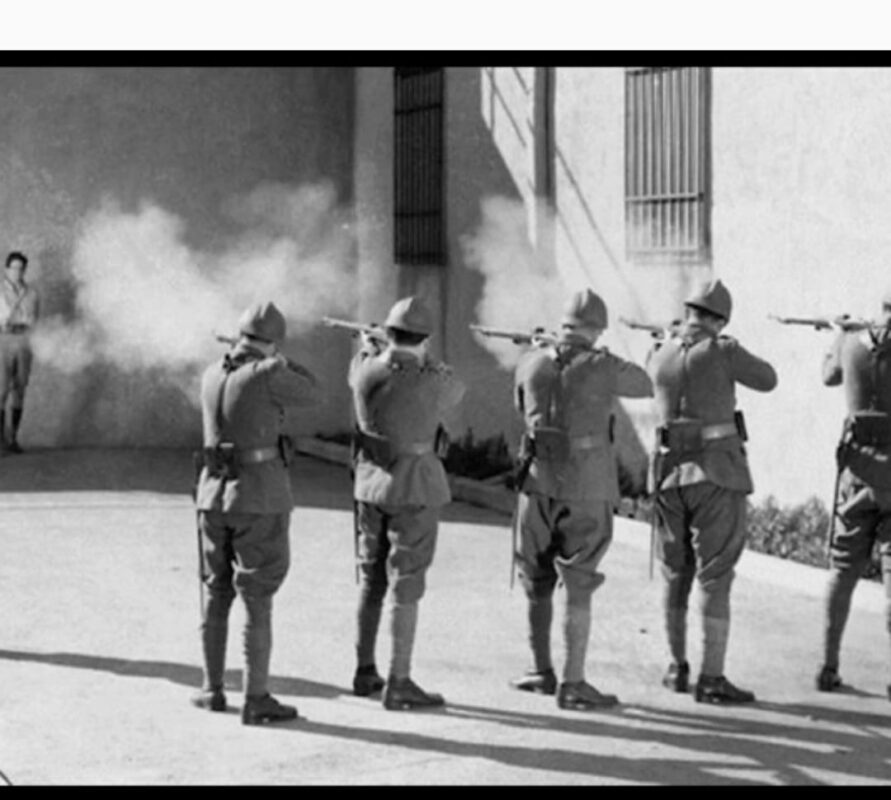
Regarding the death penalty in Indonesia as a state of law regarding the death penalty has indeed been regulated in article 10 of the Criminal Code and the implementation of the death penalty was originally determined in article 11 of the Criminal Code, namely: The death penalty is carried out by the executioner in the hanger by trapping the rope associated with the hanger on the convict’s neck and then dropping the board where the convict is standing. Furthermore, the implementation of the death penalty has been refined by Law Number: 02 / PNPS / 1964 on: Procedures for the Implementation of the Death Penalty Imposed by Courts in General and Military Courts Based on Article 1, the death penalty in Indonesia is carried out by shooting to death. Furthermore, the Procedure for the Implementation of the Death Penalty is restated by the Regulation of the National Police Number: 12 of 2010 on: Procedures for the Implementation of the Death Penalty as in Article 15, in essence determined: The execution of the death penalty was carried out by a firing squad of 12 people with long-barreled weapons with 3 rounds of live ammunition and 9 rounds of hollow bullets and each weapon containing 1 bullet which was attended by clergy and doctors and prosecutors who conducted the final examination of the convict who was blindfolded with a black cloth except refusing it and the weapon used for the execution of the death penalty and after the shooting to the heart then the Prosecutor Executors and doctors check for confirmation that death row inmates are really dead.
Similarly, in the new Criminal Code based on Article 3 paragraph 1 of Law Number 1 of 2003 it is determined that: In the event that there is a change in the laws and regulations after the act has occurred, new legislation will be applied, unless the provisions of the old laws and regulations benefit the perpetrator. This relates to the death penalty stipulated in Article 100 paragraph (1) of the new Criminal Code that: The judge may impose the death penalty with probation for 10 (ten) years by taking into account: a. the defendant’s remorse and hope for improvement, b. the defendant’s role in the crime, c. there are mitigating reasons; Paragraph (2): The death penalty with probation as in paragraph (1) must be included in the judgment; paragraph (3) The grace period of the probation period of 10 (ten) years begins 1 (one) day after the court decision has obtained permanent legal force; paragraph (4) If the convict during the probation period as referred to in paragraph (1) shows commendable attitudes and deeds, the death penalty may be changed to life imprisonment by Presidential Decree after obtaining the consideration of the Supreme Court;
Observing the above, there is indeed a lot of public interest and several opinions which state that in relation to the death penalty convict Ferdy Sambo who has been sentenced to death and is currently still in the process of filing legal remedies later it is possible that the death penalty will not be carried out against him in connection with Article 100 of the Criminal Code. the new one that will take effect has been stated in paragraph (4) that If the convict during the probation period as referred to in paragraph (1), namely in the probation period of 10 (ten) years, shows commendable attitudes and deeds, then the death penalty can be changed to life imprisonment.
However, presumably the norms of Article 100 of the new Criminal Code should be interpreted in full and not partially paragraph by paragraph, so that the opinion stating that the death penalty against death row prisoner Ferdy Sambo can occur is not implemented because it can be changed to life while during the 10-year probation period shows commendable attitudes and deeds, So the essential thing that needs to be pondered and should be underlined with a deeper understanding is that there is a provision in paragraph (2) which specifies that the death penalty with probation as in paragraph (1), namely the probation period of 10 (ten) years must be included in the decision. Therefore it is interesting to become material for reflection and thought that because in paragraph (2) of Article 100 of the Criminal Code which only stipulates that the aforementioned 10 (ten) year probation period must be included in the decision, the South Jakarta District Court’s decision which has sentenced him to death against Convicted Ferdy Sambo: “Is there a petitum in the judgment stating that the death sentence imposed on Convicted Ferdy Sambo will be carried out with and/or on probation for 10 (ten) years, meaning is there any inclusion in the judgment stating that the death row Prisoner is sentenced to probation for 10 (ten) years as referred to in paragraph (2) of Article 100 of the new Criminal Code?”
The answer to this question can be born from the results of our respective reflections which can be possible the results will appear to be different from one another and this is a natural thing because against the same 1 (one) legal issue that is being discussed by 2 (two) people who know about the law it will produce 3 (three) opinions which certainly will not be the same.
Let us reflect on the issue of the death penalty against Terp;idana Ferdy Sambo and consider with the results of our respective reflections and thoughts that the results do not have to be the same.
Thank You.
